Fans into revenue
Merchandise
Merch gives a band another way to earn from its audience beyond streams, record sales and ticket income. It can generate regular baseline sales and stronger opportunities around live shows, but every item also has production, handling and stock risk.
In brief
Start with quantities your current audience can realistically absorb. Gig activity can create high-demand moments, while ordinary days provide a steadier baseline. Keep enough band cash free for travel, recording and production instead of locking everything into stock.
The basic merch economics
Merchandise revenue is not the same as profit. Stock has costs before it sells, and the wider process can include production, staff, shipping, packaging and other operational expenses.
Production cost
You spend money to create stock before it becomes revenue.
Demand
Fans, fame, current activity and live events influence how much stock is realistically useful.
Margin
Selling price matters, but a higher price is not automatically better if demand suffers.
Unsold stock
Inventory that sits unused represents cash that cannot fund other parts of the career.
Gig sales
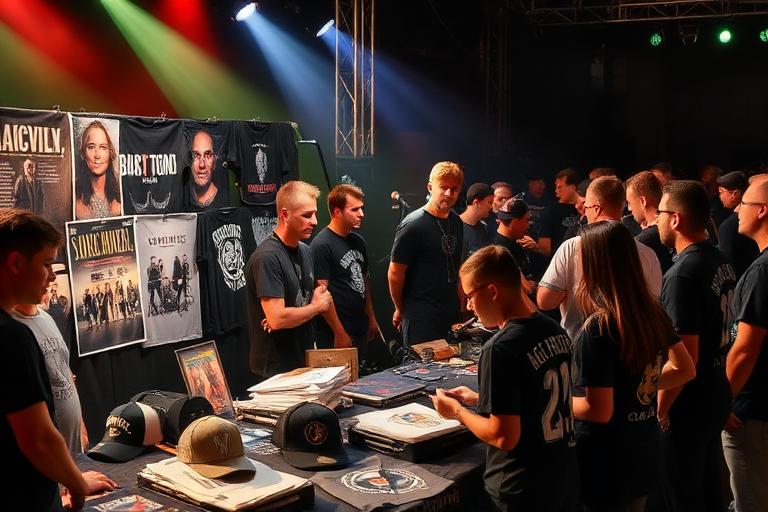
Live shows create a natural moment for fans to buy something connected to the band they have just seen. Larger audiences can create larger opportunities, but only if stock is available and the band has planned the sales side of the show.

- Check expected audience scale before deciding how much stock to carry.
- Do not assume every attendee converts into a buyer.
- Include merch stock and staffing in tour planning.
- Watch actual sales history before scaling the next production run.
A sensible stock cycle
- Review current demand. Look at fan growth, recent gigs and previous merchandise sales.
- Set a budget. Protect money needed for essential band commitments.
- Produce a reasonable batch. Avoid making your first order a bet on future fame.
- Sell through regular and live channels. Let actual demand provide evidence.
- Reorder from data. Expand successful lines and be cautious with stock that moves slowly.
Merchandise on tour
Touring increases both opportunity and complexity. Stock may need to travel with the band, and the tour budget must account for production, staff and the fact that money tied up in merchandise is not available for vehicles, accommodation, crew or emergencies.
What affects sales?
Audience size and strength, current momentum, live attendance, product availability and price all matter in sensible ways. Exact conversion rates and demand curves are intentionally not published.